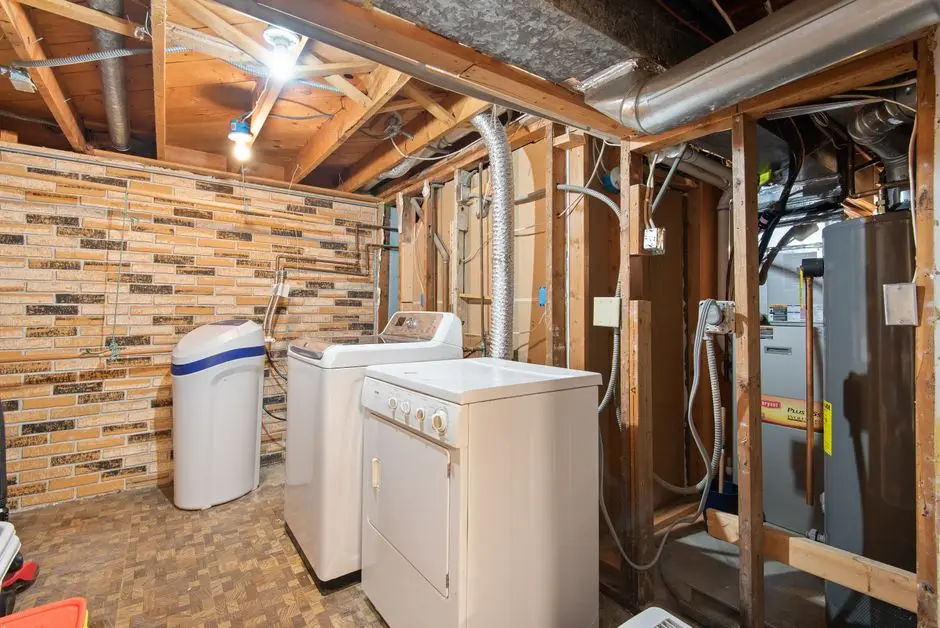
Full camera inspection
A duct camera goes into the trunk line and at least two branch runs before we start. You see the footage on our screen. This is how we know what we are dealing with and how we quote the job accurately instead of guessing.
Every basement air duct cleaning job includes the full mechanical clean, camera verification, and register covers back in place before we leave. Sanitizing, mold treatment, and dryer vent cleaning are add-ons we quote separately if the inspection shows they are needed. Here is what you get on the base service.
A duct camera goes into the trunk line and at least two branch runs before we start. You see the footage on our screen. This is how we know what we are dealing with and how we quote the job accurately instead of guessing.
Rotary brush on sheet metal, air whip and compressed air nozzle on flexible duct. Every supply and return serving the lower level gets cleaned, not just the ones that are easy to reach. We do not skip runs behind finished walls.
The entire system runs under negative pressure while we work. A HEPA vacuum and negative air machine pull debris out and hold it, so nothing blows back into your basement. This is the step cheap duct cleaning companies skip.
Any access ports we cut get sealed with mastic and duct sealant before we leave. Sealed ports mean no air leaks and no debris getting pulled back in through an open hole in the trunk line.
We run the camera back through the trunk and at least one branch so you can see the before and after side by side. If the ducts still look dirty, we keep working. That is the standard on every job.
Basement air duct cleaning in Murphy is a mechanical and vacuum process that removes settled dust, construction debris, pet dander, and microbial growth from the duct runs serving below grade rooms. We start with a duct camera inspection so we know what is inside before we touch anything. Then we cut in access ports, run a rotary brush and air whip through each branch, and hold the whole system under negative pressure with a HEPA vacuum and negative air machine. Loose debris never gets a chance to drift into your living space.
Murphy homes built in the last two decades often have finished basements with flexible duct running through tight chases and soffits. Those runs collect more debris than sheet metal trunk lines because the corrugations trap particles. Add North Texas humidity from May through September, and you get the two conditions mold needs: moisture and organic dust. If you have been searching for basement air duct cleaning Murphy TX near me and getting thin answers, that is the short version of why the work matters.
Five steps, one visit, two to four hours for a typical Murphy basement system. Here is exactly what happens from the moment we pull up.
Schedule
Call or book online — a real human picks up and confirms a 2-hour arrival window.
Diagnose
Licensed tech inspects on-site, then walks you through the cause and your options.
Fix
The job is completed to code and done right the first time — no shortcuts, no surprises.
Guarantee
Every job backed by a written workmanship warranty — and we stand behind it.
Negative air machine
Holds the entire duct system under negative pressure while we work so debris cannot escape into your basement. This is the single most important piece of equipment on the truck.
HEPA vacuum
Captures fine particles down to 0.3 microns, including mold spores and drywall dust. Runs in tandem with the negative air machine for the full duration of the job.
Rotary brush
Mechanical agitation for sheet metal trunk lines and main branches. Breaks loose debris that has bonded to the duct wall over years of use.
Air whip and compressed air nozzle
Gentler agitation for flexible duct, which cannot take the same abuse as sheet metal. The air whip reaches into the corrugations where debris collects.
Duct camera
Inspection before and after every job. We show you the footage on our screen so you can see what we saw and what changed.
Duct fogger
Applies EPA-registered sanitizer evenly through the ductwork after mechanical cleaning. Used only when the camera shows microbial growth that needs treatment.
NADCA ACR standard
The industry standard for assessment, cleaning, and restoration of HVAC systems. We follow it on every job, which is why we inspect first, clean mechanically, and verify with a camera before we call the work done.
Source removal
The principle that you clean the reservoir, not the symptom. We remove the debris sitting inside the duct instead of relying on filters or air purifiers to catch it after the fact. It is the only method that actually fixes the problem.
Negative pressure containment
The whole system stays under vacuum from the moment we open the first access port until the last register cover goes back on. This is what keeps your basement from looking like a dust storm while we work.
Camera-verified cleaning
We do not consider a job finished until the camera shows clean duct walls. If the footage still shows debris, we keep working. That standard is why our re-clean rate is close to zero.
01
What we do: We run a full camera inspection first, then clean every supply and return serving the lower level. Construction debris from the original build often shows up on camera even years later. We pull it out, seal the access ports, and verify with a second camera pass.
→ Cleaner air downstairs, less dust on furniture, and a documented baseline you can compare against in three to five years.
02
What we do: We treat this as an emergency call. The negative air machine goes in first to stop moisture from spreading, then we clean and sanitize the affected runs. Any insulation that stayed wet gets flagged for replacement rather than cleaned.
→ Moisture stopped before mold takes hold, and the ductwork is dry and sanitized instead of becoming a long-term problem.
03
What we do: Post construction duct cleaning is a different scope than routine cleaning. We use the air whip and compressed air nozzle to break loose fine dust that clings to flexible duct, then run the HEPA vacuum until the camera shows clean walls.
→ No more drywall dust puffing out of registers, and the new space is ready to use without a lingering construction smell.
04
What we do: Pet hair mats down inside flexible duct and traps other debris with it. We use the rotary brush and air whip to break it loose, then pull it out with the HEPA vacuum. We also check the return trunk, which is usually where the worst of it collects.
→ Dusting drops from every other day to once a week for most customers, and the basement stops smelling like a kennel.
Murphy sits on the Blackland Prairie clay that runs across Collin County, and that clay holds water. After a heavy spring rain, basements and crawlspaces in older parts of town stay damp for days. That moisture is what turns ordinary dust in below grade ductwork into a microbial problem. Homes built in the last twenty years often have flexible duct running through tight chases behind finished walls, and those runs trap more debris than the sheet metal trunk lines you see in older builds. We see the same pattern in Murphy Village and Timber Creek: the basement runs are dirtier than the upstairs runs because they sit closer to the moisture source. When we quote a below grade duct cleaning Murphy job, we factor in how many runs are flexible, how much access we have, and whether the camera shows growth that needs sanitizing. Most of our work stays inside ZIP 75094, and we can usually be on site within the hour for addresses in Maxwell Creek, Heritage Park, or Stonebridge.
Timber Creek
Many homes here have finished basements with flexible duct in tight soffit chases. Access is the hard part, not the cleaning itself, so we plan the port locations before we start.
Murphy Farms
Newer construction means more flexible duct and more construction debris still working its way loose. Post construction duct cleaning calls are common in this part of town.
Maxwell Creek
Larger homes with two-zone systems. The basement zone usually runs dirtier because it sits closer to grade and picks up more ground moisture.
Heritage Park
Established neighborhood with a mix of original sheet metal and retrofitted flexible duct. We check both on the same visit because they need different cleaning methods.
Stonebridge
Finished basements with media rooms and home offices. These spaces get used daily, so the ducts see more traffic and collect more debris than a storage-only basement.
High humidity from May through September
North Texas summers push relative humidity into the 70s and 80s for months. Below grade ductwork stays damp longer, which is exactly the condition mold needs. Cleaning before the humid season starts is the smart play.
Clay soil that holds water after storms
Blackland Prairie clay does not drain quickly. After a heavy rain, basements and crawlspaces in older Murphy neighborhoods stay damp for days, and that moisture finds its way into duct insulation.
Flexible duct in tight chases
Many Murphy homes built after 2000 use flexible duct behind finished walls. Access is limited, so we plan port locations carefully and use the air whip instead of the rotary brush on those runs.
Two-story homes with basement zones
Basement zones run dirtier than upper floor zones because they sit closer to grade and pick up more ground moisture. When we clean, we check the zone damper and balance airflow so the basement is not starved.
Below grade ductwork fails in predictable ways. Here are the four calls we get most often from Murphy homeowners, and what we do about each one.
Problem
A persistent damp odor in a finished basement usually means microbial growth on duct insulation or inside flexible duct. Left alone, it spreads and the smell gets stronger every humid month.
Our Fix
We camera-inspect to find the growth, mechanically remove it with the rotary brush and air whip, then apply an EPA-registered sanitizer with a duct fogger. We re-check with the camera before we leave so you know the source is gone, not just covered up.
Problem
When dust blows out of a register the moment the blower kicks on, the duct is loaded and the system is spreading debris through the whole lower level every cycle. Filters cannot fix that.
Our Fix
We clean the trunk and every branch serving the basement, then verify with the camera. Once the debris reservoir is gone, the blower is pushing clean air. Most customers notice the difference in dusting within a week.
Problem
Restricted or disconnected basement duct runs force the blower to work harder and starve the rooms at the end of the line. Energy bills climb and the rooms stay cold no matter what the thermostat says.
Our Fix
We clean the runs and check every connection at the collar. Crushed flexible duct gets replaced, disconnected runs get reconnected, and we re-balance airflow where we can. The rooms that always ran cold usually catch up within a day.
Problem
Pet dander, pollen, and dust mite debris settle in below grade ductwork and get pushed back into the air every time the system runs. If someone in the house sneezes more in the basement than upstairs, the ducts are usually the reason.
Our Fix
We clean the full lower level system with HEPA filtration and add sanitizing if the camera shows microbial growth. Removing the source is what actually helps. Filters and air purifiers treat the symptom, not the reservoir.
Dirty basement ducts do not just look bad on camera. They change how your lower level feels, smells, and heats. Here is what changes after we clean the runs.
Noticeably less dust
Most Murphy customers tell us lower level dusting drops from every few days to once a week or less. That happens because we remove the reservoir of settled debris inside the duct, not just the dust sitting on your furniture. A clean trunk line stops re-seeding the room every time the blower kicks on.
Musty odors gone
That damp, closed-in smell in a finished basement usually traces back to microbial growth on duct insulation or inside flexible duct. We treat the source with a duct fogger and EPA-registered sanitizer after mechanical cleaning, then verify with a duct camera. Odors that used to hit you at the bottom of the stairs stop coming back.
Better airflow downstairs
Restricted basement runs force your blower to work harder to push air into lower level rooms. Once we clear the debris and check for crushed or disconnected flexible duct, static pressure drops and the rooms that always ran cold start catching up. Many customers see a measurable difference in how fast the lower level heats.
Fewer allergy flare-ups
Pet dander, pollen, and dust mite debris settle in below grade ductwork and get pushed back into the air every cycle. If someone in your house wakes up congested or sneezes more in the basement than upstairs, a full lower level duct cleaning Murphy TX service with HEPA filtration is usually the first thing worth trying.
Google ★★★★★4.9
Called about a musty smell in our finished basement. They came out the same afternoon, ran a camera through the ducts, and showed us exactly where the problem was. Cleaned everything, sanitized, and re-ran the camera before leaving. Flat price, no upsell. Highly recommend for anyone in Murphy with a basement.
Yelp ★★★★★5.0
We have two dogs and the basement dust was out of control. PureBreeze Path pulled what looked like a small animal out of the return. Dusting went from every other day to once a week. They also checked the dryer vent and cleared a clog we did not know about. Fair pricing and clean work.
BBB ★★★★★4.8
Professional from start to finish. They laid drop cloths, sealed every register, and kept the vacuum running the whole time so nothing blew back into the house. The camera walkthrough at the end was the part that sold me. You can see the before and after on the same screen.
Real answers to the questions we hear most often from local homeowners and property managers.
Our local Airduct cleaning service covers the full system, not just the basement. If your lower level ducts are dirty, the upper floor runs usually are too. We clean both in one visit so the blower is not pushing debris from one zone into the other.
View local Airduct cleaningMurphy homeowners searching for Airduct cleaning near me get the same crew, same equipment, and same camera verification. We serve all of Collin County from our Murphy base, so travel time is short and same day slots are realistic.
View Airduct cleaning near meWater in the basement, a burst pipe, or a sudden mold smell does not wait for business hours. Our 24/7 Airduct cleaning line is live for emergencies, and we can get a tech out overnight to stop moisture from settling into your duct insulation.
View 24/7 Airduct cleaningSame Day Airduct cleaning is available most weekdays if you call before noon. It is a good fit for real estate closings, move-in deadlines, or a sudden musty smell you want handled before guests arrive. We confirm the window when you book.
View Same Day Airduct cleaningEmergency Airduct cleaning covers post-storm water intrusion, sewage backups, and any situation where microbial growth in the ductwork needs to be stopped fast. We bring the negative air machine and sanitizing equipment on the first visit so we are not scheduling a second trip.
View Emergency Airduct cleaningCommercial Airduct cleaning for Murphy offices, retail spaces, and light industrial buildings follows the same NADCA standard but on a larger scale. We schedule after hours so your business does not lose a day of operation.
View commercial Airduct cleaningCall (855) 948-0345 or email [email protected] and we will get back to you fast. Our phones are answered 24/7 for emergencies, and regular scheduling runs Monday through Friday, 8 a.m. to 6 p.m. If you are in Murphy, we can usually get a tech to your door the same day.
Phone
(855) 948-0345Address
410 W Farm to Market 544, Suite 102 Murphy, TX 75094 USA, Murphy, Texas
Hours
Mon–Fri: 7AM – 7PM
Sat: 8AM – 4PM
Sun: Emergency Only
24/7 Emergency Available